

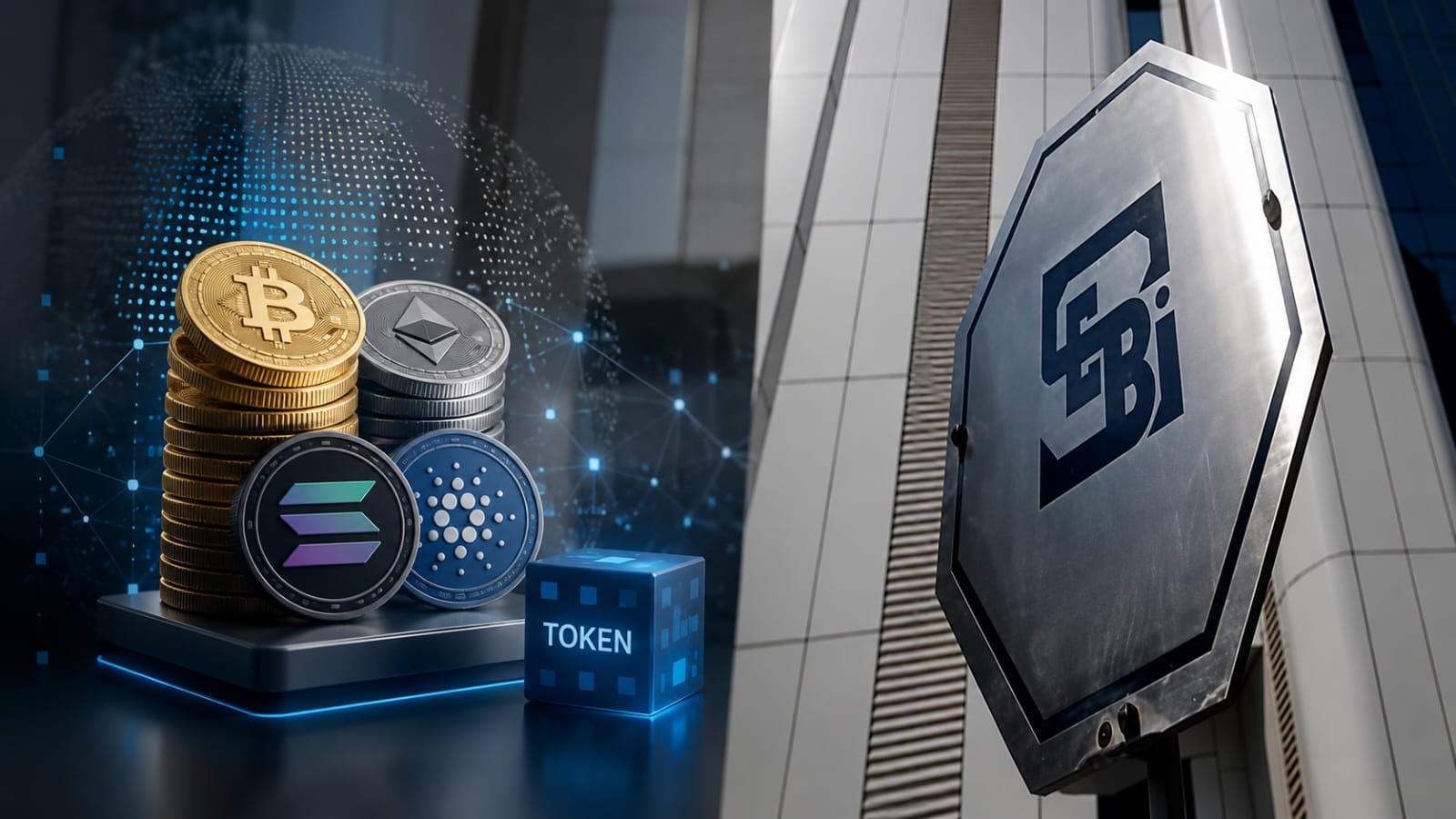
The Securities and Exchange Board of India (SEBI) has announced a pilot project to tokenise corporate bonds — a move that has generated significant excitement in both financial and technology circles. But what does this pilot actually mean? Is it a game-changer or just a cautious first step?
Understanding Tokenised Corporate Bonds
A corporate bond is essentially a loan given by investors to a company. In return, the company promises to pay back the principal amount along with interest. Traditionally, these bonds exist as paper certificates or entries in centralised databases managed by depositories.
Tokenisation means converting the ownership record of these bonds into a digital token on a blockchain — a shared, transparent, and secure digital ledger. The token itself is not a new asset. It is simply a digital representation of the existing corporate bond. Whoever owns the token owns the bond.
Why This Matters
Unlike speculative cryptocurrencies such as Bitcoin or Ethereum, tokenised corporate bonds are backed by real-world assets (RWAs) — a legally enforceable promise by a company to repay debt. However, the underlying technology (blockchain, digital wallets, smart contracts, and trading mechanisms) comes directly from the crypto ecosystem.
This creates an interesting situation for Indian regulators. While India has tried to keep crypto and traditional finance separate, successful tokenisation of bonds will require the very infrastructure, expertise, and innovation that the crypto industry has developed over the last 15 years — including custody solutions, 24/7 liquidity, and secure digital asset transfers.
The Big Unanswered Question: Permissioned or Permissionless?
One of the most critical aspects SEBI’s announcement left unclear is whether the pilot will run on a permissioned (closed) blockchain or a permissionless (open) one.
- Permissioned Blockchain: Only approved institutions can participate. This offers better control and regulatory oversight but limits liquidity, secondary market efficiency, and retail participation.
- Permissionless Blockchain: Anyone can participate, potentially leading to better price discovery, higher liquidity, and global interoperability.
Experts believe that choosing a fully closed system may result in simply “digitising the status quo” rather than unlocking the true potential of tokenisation.
The Road Ahead
SEBI’s pilot is undoubtedly a positive and meaningful step toward modernising India’s capital markets. Tokenisation can bring faster settlement, lower costs, greater transparency, and easier access for investors.
However, for tokenisation to deliver its full promise, regulators will eventually need to address tougher questions:
- How much will the crypto ecosystem be involved?
- Will retail investors get meaningful access?
- How will India balance innovation with risk management?
Conclusion
SEBI’s tokenisation pilot signals that India is slowly embracing blockchain technology in regulated finance. If executed boldly, it could bridge the gap between traditional finance and the crypto world, positioning India as a leader in the global RWA revolution. But if kept too restrictive, it may become just another limited experiment.
The coming months of this pilot will be crucial in determining whether India chooses meaningful innovation or cautious digitisation.
Also read: Between Prudence and Possibility: What the UK’s Crypto Shift Means for India
 manojsharma76us@yahoo.com